Condo Water Cleanup in Hollywood, FL
Condos add a layer of complexity that single-family homes don't have: shared walls, stacked plumbing, HOA rules, and the question of whose insurance covers what. A dishwasher leak in unit 4B becomes a ceiling stain in 3B and a hallway odor by the weekend. Condo water cleanup in Hollywood, FL — a city dense with high-rises and mid-rise communities — means technical cleanup plus navigating the building's rules and the relationships between neighbors.
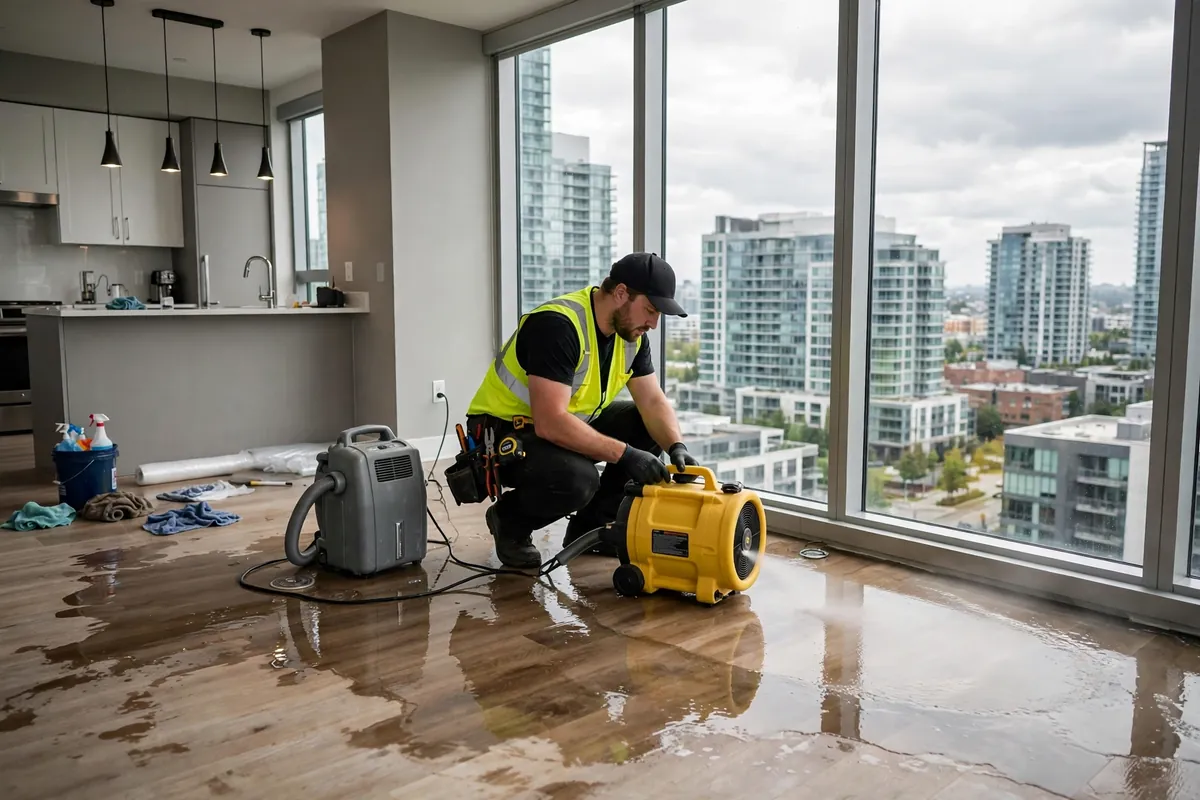
Understanding Condo Water Cleanup in Hollywood
The most common condo losses start in kitchens and bathrooms: supply lines, toilet valves, washing machine hoses, and water heater failures in utility closets. Because units are stacked, water moves vertically through floor assemblies — what starts as a minor leak upstairs arrives as a ceiling risk downstairs. Shared drain stacks and risers can affect multiple units from a single failure point. The first task is always mapping the true extent, which frequently crosses unit boundaries the caller didn't expect.
Then comes the building itself. Many Hollywood condo associations have specific requirements: approved vendor lists, work-hour restrictions, elevator reservations for equipment, and protection for common-area hallways and lobbies. Master insurance policies typically cover the building's common elements and original construction, while the unit owner's HO-6 policy covers interior finishes and belongings — and the line between them confuses almost everyone. Clear documentation that separates building damage from unit damage saves weeks of argument later.
How We Handle the Job
We coordinate with building management before equipment rolls — access, work hours, and common-area protection are settled upfront. Moisture mapping covers every affected unit, not just the source: ceilings below, walls beside, and floors above the leak all get readings. Extraction and drying proceed unit by unit, with containment where needed to keep dust and noise from spreading through shared hallways. The association's requirements are followed as given, not debated on site.
Each unit's damage is documented separately, with photos and moisture logs that distinguish common-element damage from unit-interior damage — your adjuster and the association's adjuster will both want that separation. Drying is verified per unit before equipment moves on; a dry reading in 4B means nothing for the ceiling in 3B. Related services such as emergency water extraction, structural drying, and flood cleanup often connect to the same loss depending on conditions on site.
Local Response and Insurance Support
Searching for condo water cleanup near me usually means you need help without delay. We answer emergency calls around the clock. Documentation — photos and moisture readings — supports conversations with your insurance carrier when the loss is sudden and accidental. We do not decide coverage; we provide clear technical information about the work performed.
When to Call
Call if you have active water, wet materials that are not drying, odors after a leak, or a backup that may involve contaminated water. Early action in Hollywood’s climate is almost always less disruptive than waiting. For neighborhood-specific service, see our service areas. For the full list of capabilities, visit all services.
Frequently Asked Questions
My neighbor's leak damaged my unit — who pays?
Typically, your own HO-6 condo policy covers your unit's interior damage regardless of where the water came from, and your insurer may then pursue the neighbor's liability. The building's master policy usually covers common elements and sometimes original fixtures. Report to your association and your insurer promptly, and document everything — fault matters less than fast mitigation in the first 48 hours.
Can the crew work in the hallway or elevator lobby?
Only with association approval. Most buildings require common areas to be protected, work restricted to certain hours, and equipment transport scheduled around residents. We coordinate these logistics with building management as part of the job — it's routine in condo work.
What if the HOA has an approved vendor list?
Many associations do, and working outside it can create friction — or the association may assign the common-element portion to their vendor while you choose your own for the unit interior. Ask your property manager about vendor requirements before authorizing work; it avoids disputes over who was allowed to do what.
How do you dry a concrete high-rise unit?
Concrete block and poured concrete dry slowly and need confirmed meter readings, not timelines. Equipment is sized for the space and often runs longer than in wood-frame construction. Noise matters more with neighbors on all sides, so placement and scheduling account for that. The structure is solid — it just demands patience and verification.